K-Points News: Beyond the Headlines — War, Unrest, Commodity Prices, and Beyond

K-Points News: Beyond the Headlines — War, Unrest, Commodity Prices, and Beyond
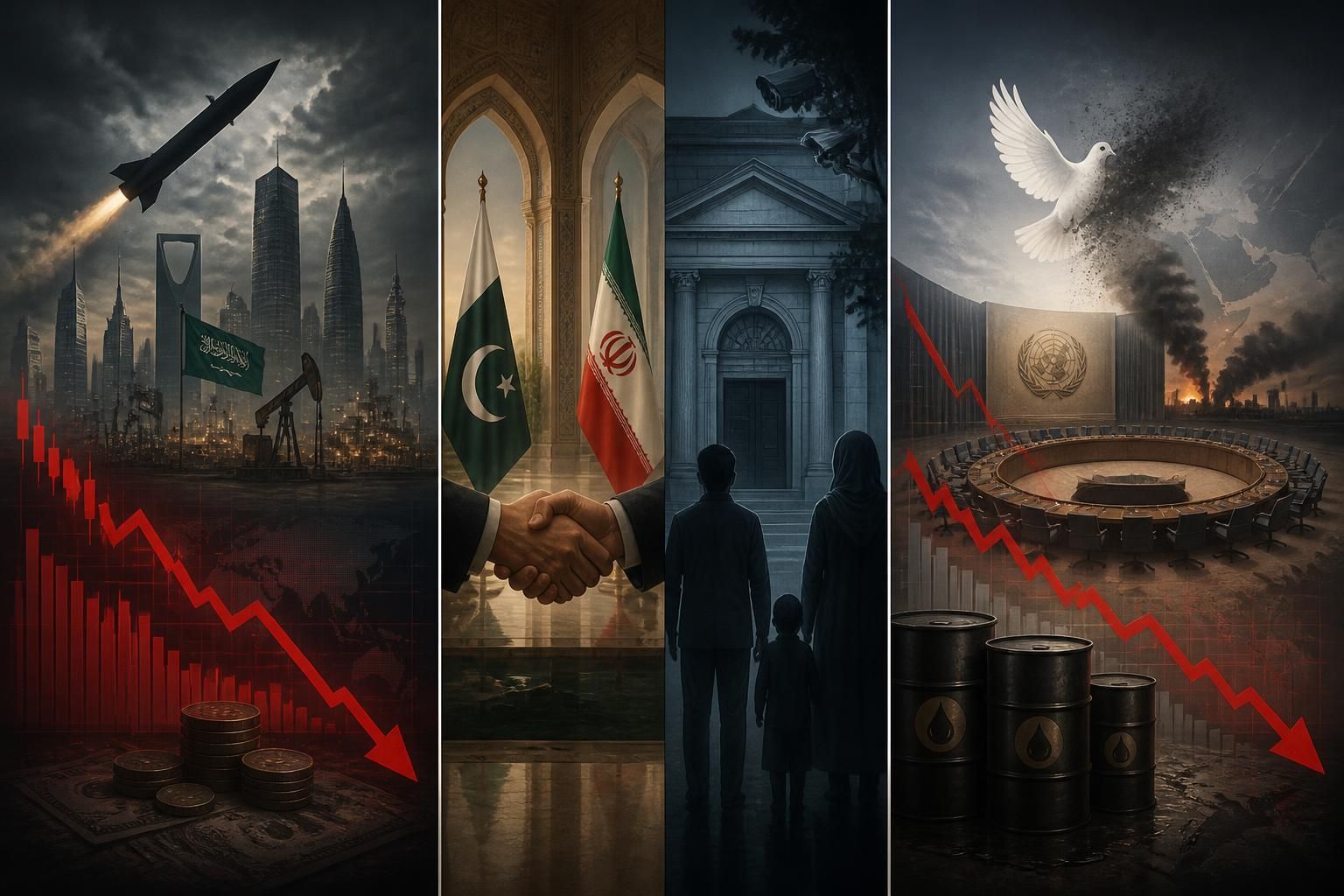
Ansar Allah (Houthis) Threatens to Wreck Saudi Economy ;Pakistan Deploys Diplomacy in Tehran, Arrests Opposition Kin at Home; Oil Prices Fall Amid False Hopes for UN Diplomacy to End Iran Conflict
Ansar Allah (Houthis) Threatens to Wreck Saudi Economy
Senior military commanders of Yemen’s Ansarallah movement, known as the Houthis, have issued a warning to Saudi Arabia, threatening to target critical energy infrastructure deep within the kingdom if Riyadh continues with its ongoing airstrikes and naval blockade on Yemen. According to a report by Iran’s Press TV, the Houthi leadership asserted that such retaliatory strikes could effectively "destroy the Saudi economy."
In a joint statement released by senior political and military figures, the group vowed to continue and intensify their military operations against Saudi Arabia, which has led a coalition in Yemen since 2015. The commanders specifically warned that Yemeni ballistic missiles and combat drones now possess the range and precision to reach locations where senior Saudi officials might seek shelter, including command centers and safe zones.
“The slightest folly you commit will come at a heavy price,” the statement declared, adding that Yemen’s armed forces had introduced what they described as a “new equation of deterrence.” While the statement did not provide technical specifics, it implied that recent battlefield developments—such as the use of advanced long-range drones and upgraded missile systems—have shifted the balance of power, enabling Yemen to strike back at economic and strategic assets deep inside Saudi territory.
The warning comes amid intensified Saudi-led coalition airstrikes on the Yemeni capital, Sanaa, and other Houthi-held areas, as well as a strict blockade that has severely limited the flow of food, fuel, and humanitarian aid into the country.
Pakistan Deploys Diplomacy in Tehran, Arrests Opposition Kin at Home
Pakistan’s Interior Minister, Syed Mohsin Naqvi, arrived in Tehran on Monday for talks with Iranian officials, according to Iranian media. His visit is focused on expanding bilateral ties and coordinating on shared interests. Iranian Foreign Ministry spokesperson Esmaeil Baghaei stated on Saturday that the trip would primarily follow up on previous understandings between the two nations, particularly decisions made at the leadership level.
Baghaei also noted that Pakistan, which has served as a mediator between Iran and the United States, may raise regional issues during the visit. However, there was no indication that Naqvi carried a specific message or proposal from Washington. Naqvi has traveled to Tehran multiple times since Pakistan began its mediation efforts.
Meanwhile, on the same day, Pakistani police arrested Aleema Khan, sister of jailed former Prime Minister Imran Khan, at her home in Lahore, Reuters reported. A Pakistani official stated that the she was taken into custody and will be jaied fro 30 days on the grounds that their presence in any public setting would present a serious danger to public safety” . Imran Khan’s party has organized a march to Islamabad next week demanding his release. Interior Minister Naqvi said Saturday that the government would take all necessary steps to stop the protest. Zulfi Bukhari, a close aide to Khan, called the arrest “absolutely despicable,” adding, “The fear of the 27th protest is clearly taking its toll.”
Oil Prices Fall Amid False Hopes for UN Diplomacy to End Iran Conflict
Oil prices fell to their lowest level in a week on Monday as traders responded to hopes (rather false hopes) that growing diplomatic activity during this week’s United Nations General Assembly in New York could create an opening to end the US–Iran conflict.
In comments to Fox News, President Donald Trump said Washington had received a list of demands from Tehran regarding a possible end to the war. He also indicated that he would be open to meeting Iranian President Masoud Pezeshkian, who is scheduled to travel to New York for the UN General Assembly, which begins on Tuesday.
However, there has been no clear indication that Tehran is prepared to accept a presidential meeting with Trump. Iranian officials have repeatedly insisted that Washington must first address Iran’s core demands before negotiations can begin. These demands include a commitment to peace, the withdrawal of Israeli forces from Lebanon and Gaza, the unfreezing of Iranian assets, and an end to the US blockade and sanctions.
Trump is also expected to meet with officials from the Gulf states in New York as Washington steps up high-level diplomacy with its Arab partners. Representatives from Iraq, Jordan and Egypt could also participate in discussions focused on regional security and the possibility of opening a channel of communication with Tehran. The talks are likely to address the conflict’s wider consequences, including attacks on regional infrastructure, disruptions to shipping and the threat of further escalation.
Despite the diplomatic activity, the prospects for a breakthrough during the UN General Assembly remain limited. Iran has shown little willingness to negotiate without concrete guarantees and concessions, while the US administration has given no indication that it is prepared to accept Tehran’s conditions. Washington continues to emphasize sanctions, pressure on Iran’s economy , rather than signaling an immediate end to the blockade or a broad withdrawal of regional support.
The diplomatic gap means that the initial decline in oil prices is temporary. Markets often respond quickly to signs of negotiations, pricing in the possibility that a ceasefire or political agreement could reduce the risk of supply disruptions. But if the UN meetings fail to produce direct talks or a credible framework for ending the conflict, traders may once again focus on the risks to crude production and transportation across the Middle East.
Any renewed military escalation, further attacks on energy infrastructure, or disruption to shipping routes such as the Strait of Hormuz and the Red Sea could push prices higher. Brent crude had already risen sharply during the conflict before retreating as markets reacted to tentative signals that some supplies could be restored
