K-Points: Beyond the Headlines — War, Unrest, Commodity Prices, and Beyond
K-Points: Beyond the Headlines — War, Unrest, Commodity Prices, and Beyond
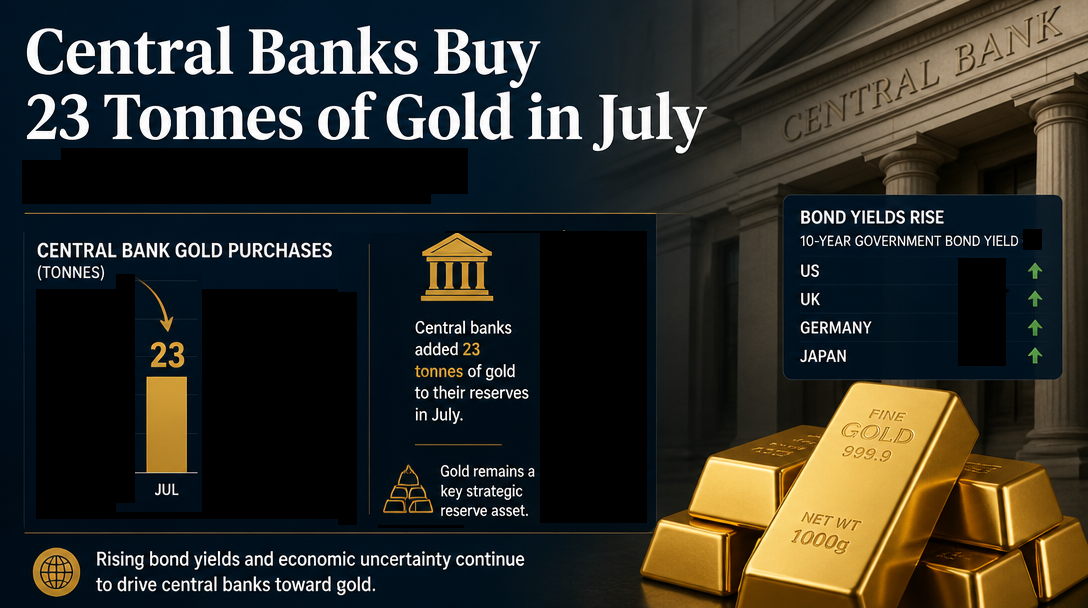
Central Banks Buy 23 Tonnes of Gold in July as Bond Rates Rise
According to the latest data from the World Gold Council (WGC), central banks worldwide added a net 23 tonnes of gold to their official reserves in July 2026. This continues a broad trend of de-dollarization and portfolio diversification, even as the pace of year-to-date acquisitions has moderated slightly compared to the same period last year.
The WGC report reveals that net official gold purchases from January through July 2026 reached approximately 130 tonnes.
The People’s Bank of China led the charge, adding a significant 20 tonnes to its reserves, reaffirming Beijing’s long-term strategy to reduce dependency on the U.S. dollar. The National Bank of Poland followed with a robust 8 tonnes, continuing its multi-year accumulation program. Other notable purchases included:
Czech Republic (+2 tonnes)
Kazakhstan (+1 tonne)
Bank Negara Malaysia (+1 tonne)
Central Bank of Bolivia (+1 tonne)
Gold has effectively replaced the US dollar and Treasury bonds as the reserve currency. The surge in natural gas and diesel prices has further unsettled bond markets, as investors grow increasingly concerned about the inflationary impact of rising energy costs. On Wednesday, the US 10-year Treasury yield climbed to 4.8%, reflecting anxiety over the potential for sustained inflation and the Federal Reserve’s likely response through tighter monetary policy. Financial analysts have warned that if the 10-year bond yield reaches 5% or higher, the consequences for the American economy could be severe, potentially triggering a recession or financial instability. Central banks and private investors alike view gold as a safe haven.