K-Points News: Beyond the Headlines — War, Unrest, Commodity Prices, and Beyond

K-Points News: Beyond the Headlines — War, Unrest, Commodity Prices, and Beyond
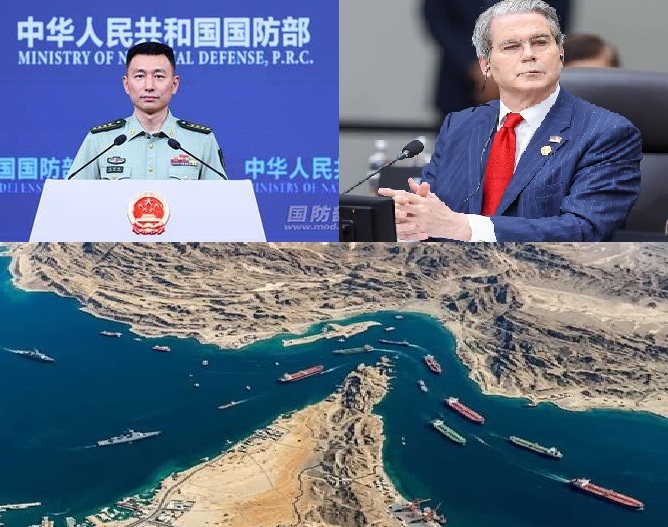
Left: Chen Xi, spokesperson for China's Ministry of National Defense (CGTN), Right: US Secretary of the Treasury Scott Bessent, Down: Strait of Hormuz
China Warns Against Japan’s Remilitarization, Iran Formalizes Strait of Hormuz Control, US Returns to Sanctions as It Struggles to Sustain War on Iran
China Warns Against Japan’s Remilitarization
Ahead of the 81st anniversary of Japan’s surrender in World War II, China’s Ministry of National Defense spokesperson, Chen Xi, issued a warning on Friday, calling on Japan to conduct a thorough and honest reflection on its history of wartime aggression. Speaking at a regular press briefing, the spokesperson urged Tokyo to immediately halt what Beijing describes as increasingly dangerously acts of remilitarization, CGTN reported.
Chen Xi specifically criticized Japan’s recent strategic shift toward a more offensive military posture, pointing to its substantial increase in the national defense budget, the rapid development of long-range and strike-capable weapon systems, and the aggressive expansion of its military-industrial complex. According to Chen, these actions are being falsely justified by Tokyo under the pretext of addressing so-called external threats—a narrative he firmly rejected.
“Japan’s neo-militarism has laid bare its true ambition,” Chen said. “We must remain highly vigilant against the dangers it poses, not only to regional stability but to the post-war international order as a whole.”
Chen said that the facts of Japan’s wartime atrocities must never be forgotten. “Justice and peace not be compromised,” he said. He urged Japan to take meaningful steps to recognize and atone for its crimes, strictly adhere to the international framework established after World War II, and abandon any dangerous moves toward rebuilding its military capacity beyond defensive needs.
Chen added: “Any return to the wrong path—any attempt to revive militarism or challenge the post-war consensus—will bring a more crushing defeat and a more complete reckoning than history has already recorded.
Iran Formalizes Strait of Hormuz Control
Iran has taken a significant step toward solidifying its authority over the Strait of Hormuz, the world’s most strategically vital oil chokepoint. A parliamentary committee in Tehran has approved the foundational principles of a new strategic plan aimed at governing both security and development in the Strait and the broader Persian Gulf region.
Valiullah Bayati, a spokesperson for the parliament’s internal affairs and councils committee, confirmed the development on Friday, stating that the proposals will now advance to higher levels of review.
“The strategic action plan to ensure the security and progress of the Strait of Hormuz and the Persian Gulf was reviewed by the Councils’ Commission and, after hearing the opinions, its general outline was approved,” Bayati told the semi-official Tasnim news agency.
The plan would bar vessels and equipment belonging to the United States, Israel, and other countries that Iran designates as hostile from transiting the waterway.
US Returns to Sanctions as It Struggles to Sustain War on Iran
Following its failure to achieve a decisive military outcome against Iran, the United States has reverted to economic pressure and sanctions as its primary tool to force concessions from Tehran. This shift in strategy reflects a return to a familiar approach after its battlefield ambitions were thwarted.
In a recent interview with Newsmax, U.S. Secretary of the Treasury Scott Bessent announced that Washington is preparing to unveil unprecedented measures next week aimed at intensifying Iran's economic isolation. “We went from Epic Fury to economic fury. And at the president’s orders, we have raised the level even again. And watch the space for more announcements coming next week because we are going to apply measures like have never been seen in the history of economic isolation on a country,” Bessent stated.
Many analysts interpret this escalation as a desperate attempt by Washington to regain leverage after its military setbacks. Unable to force Iran into submission on the battlefield, the U.S. is now seeking to compel Tehran to return to the negotiating table through crippling economic pressure. The looming sanctions are widely seen not as a sign of strength, but as a last-resort maneuver by an administration that has exhausted its military options and is scrambling for a diplomatic lifeline.
