K-Points News: Beyond the Headlines — War, Unrest, Commodity Prices, and Beyond

K-Points News: Beyond the Headlines — War, Unrest, Commodity Prices, and Beyond
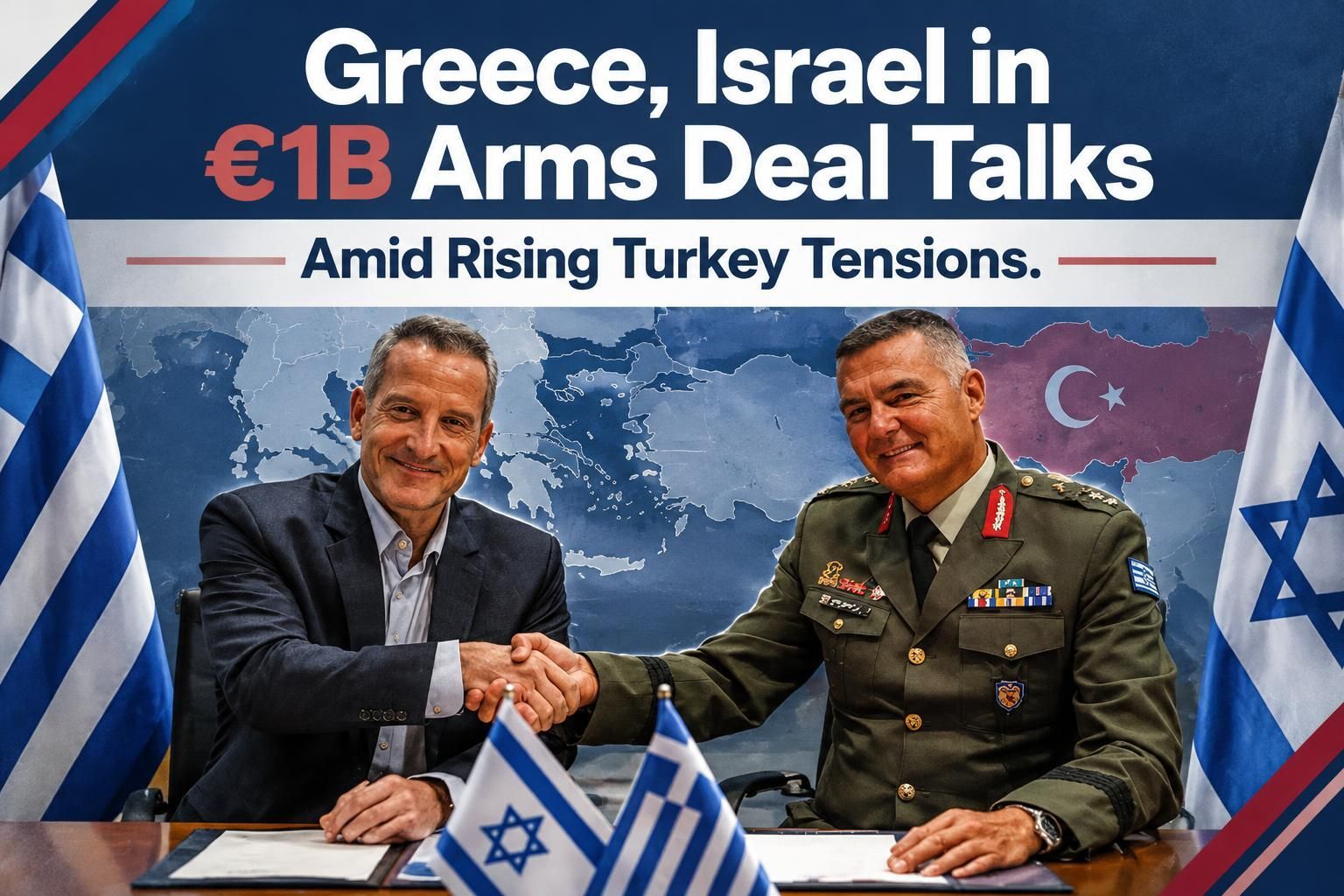
Greece is actively working to enhance its military capabilities in response to what it perceives as a growing threat from Turkey. Both Athens and Jerusalem regard Turkey as a significant security concern, a shared perspective that has deepened defense cooperation between the two countries. According to a report by the Greek news outlet Kathimerini on November 22, Greece and Israel are currently negotiating a series of weapons deals worth approximately €1 billion. The proposed agreements include advanced electronic warfare systems, long-range missiles, and the expansion of a fighter-jet training center located in southern Greece.
At the center of these talks is the International Flight Training Center (IFTC) at Kalamata Air Base. Established in 2021 under a 20-year agreement with the Israeli defense firm Elbit Systems, known for its drone production, the facility is valued at €1.5 billion. It uses T-6 Texan II and M-346 trainer aircraft alongside simulators to provide comprehensive pilot training. Demand for the center’s programs is rising, particularly from the United Arab Emirates, which has offered to cover several years of operating costs. Expanding the IFTC would allow for a greater number of trainees and possibly new training tracks for advanced fighter pilots.
Discussions regarding the transfer of electronic warfare systems and related technology from Israel to Greece are also at an advanced stage, Kathimerini reported. These systems are intended to improve Greece’s ability to detect, jam, and counter enemy radar and communications,key assets in any potential conflict scenario.
In parallel, Greek officials are negotiating with Israel Aerospace Industries (IAI) to acquire LORA (Long-Range Artillery) missiles. These missiles, whose range has recently been extended to 500 kilometers, are designed for precision strikes against high-value targets. Athens is concerned about the possibility of a future conflict with neighboring Turkey and views the LORA system as a strategic deterrent. Greece is reportedly seeking a deal to build a joint production facility on Greek soil, which would allow for local manufacturing and maintenance of the missiles, reducing dependency on foreign supply chains and boosting domestic defense industry capabilities.
