K-Points News: Beyond the Headlines — War, Unrest, Commodity Prices, and Beyond

K-Points News: Beyond the Headlines — War, Unrest, Commodity Prices, and Beyond
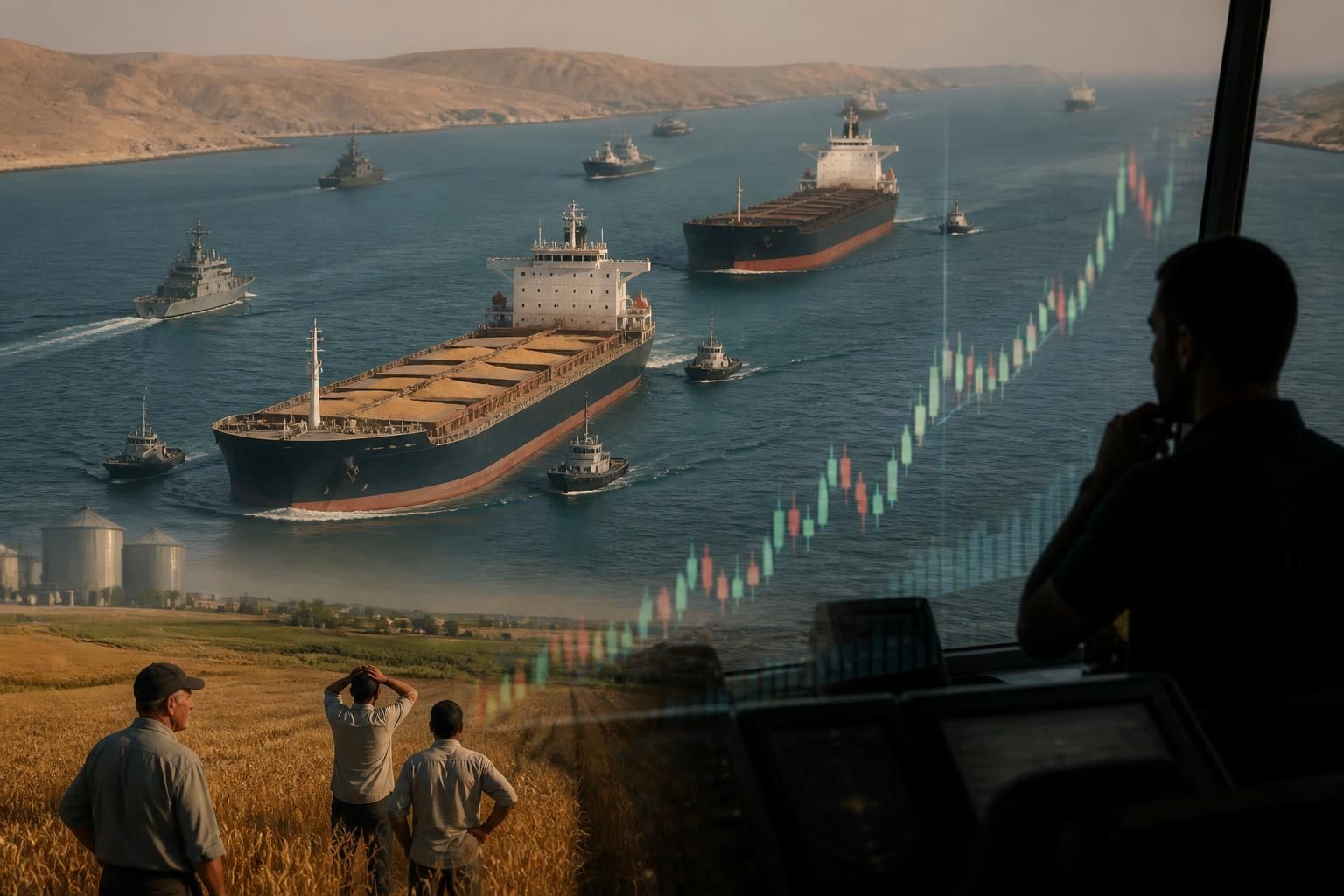
Hormuz Strait Closure Could Send Grain Prices Up 80% and Trigger Global Food Crisis
International Chamber of Commerce (ICC) Secretary General John Denton has warned that the closure of the Strait of Hormuz could trigger a major global food security crisis . The Strait of Hormuz is an important waterway for the transport of energy, agricultural inputs, and other essential commodities. Prolonged disruption could therefore create ripple effects across global supply chains, increasing costs for farmers and consumers alike.
According to The Wall Street Journal, Denton said that grain prices could rise by as much as 80 percent if the strait is not reopened. Such an increase would place additional pressure on countries that depend heavily on import of wheat, corn, and other crops, particularly poorer nations that are already struggling with high food prices.
The crisis has also affected the global fertilizer market. Approximately 2.7 million tons of fertilizer have been removed from the international market, representing a decline of nearly 40 percent in available supplies. A prolonged shortage could limit agricultural production in the next planting cycle, raise farming costs, and further intensify concerns about food availability and affordability worldwide.
The closure of the Strait of Hormuz is a result of the US and Israeli war on Iran, which began on February 28th. In response to this attack, Iran closed the strait, effectively cutting off the supply of more than seven important products such as oil, LNG, fertilizes, helium and aluminum.
Aramco CEO Warns Global Oil Stockpiles ‘Scarily Thin’ as Houthis Strike Company Facilities and Target Abha Airport
The chief executive of Saudi Aramco has warned that global oil stockpiles have become “scarily thin.” Amin Nasser said the conflict had reduced oil supplies from the region by nearly 3 billion barrels, while more than 1 billion barrels had been released from strategic and commercial reserves to help offset the decline.
Nasser estimated that fewer than 6 billion barrels of commercial oil inventories remain worldwide, adding that the vast majority of those reserves are not practically available to the market. His warning comes as global supply concerns intensify and geopolitical tensions continue to threaten oil production and transportation routes across the Middle East.
The Saudi-led military intervention in Yemen has further escalated tensions between Saudi Arabia and the Houthi movement. In response to Saudi air strikes and what the Houthis describe as a blockade of Yemen, the group has increased its attacks on Saudi territory.
Yahya Saree, the military spokesperson for Yemen’s Houthis, said on Monday that the group was targeting airports and Saudi Aramco facilities in Saudi Arabia with drones and ballistic missiles. He described the attacks as retaliation for recent Saudi air strikes on Yemen, including strikes on the capital, Sanaa.
Saudi officials said their fighter jets carried out hundreds of air strikes across Yemen on Monday. At the same time, the Saudi backed forces launched a ground offensive aimed at retaking areas controlled by the Houthis in southwestern Yemen and along the Red Sea coast. Saudi-backed forces claimed they retook several areas, including Mocha. However, Yemen's Houthis denied the claims, asserting they still control battlefield gains and dismissing the Saudi announcements as "imaginary victories."
The intensified Saudi campaign has been followed by a rise in Houthi missile and drone attacks against the kingdom. On Tuesday, the Houthis claimed that they had targeted Abha International Airport in southwestern Saudi Arabia with missiles.
“We reiterate our warning to all international airlines regarding the consequences of continuing to operate flights within Saudi airspace, as it has become a theatre for our military operations, with the exception of the airspace over the holy sites in Mecca and Medina,” the group said in a statement.
Continued strikes against airports, oil facilities and other critical infrastructure could further disrupt regional energy supplies and add pressure to already depleted global oil inventories.
