K-Points News: Beyond the Headlines — War, Unrest, Commodity Prices, and Beyond

K-Points News: Beyond the Headlines — War, Unrest, Commodity Prices, and Beyond
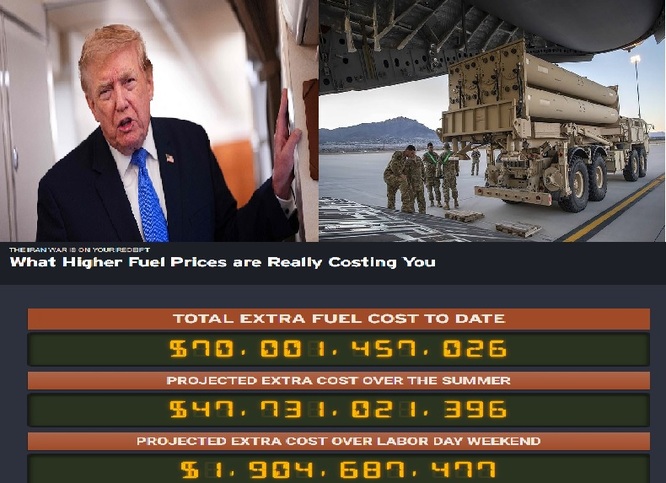
Iran Refuses Negotiations, Contradicting Trump’s Claim; ITP Analysis Pegs U.S. Consumer War Cost at 70B as Pentagon sign 3B in Interceptor Production Deals
Iran has denied that any talks are underway with the United States, contradicting a claim by Donald Trump. Trump said on Saturday that he had called off planned strikes on Iran and that negotiations would begin on Monday.
“Obviously, they don’t want to be attacked,” Trump told reporters aboard Air Force One on Sunday. “Now what we’re doing is we’re talking to them in the form of a negotiation. It begins tomorrow afternoon.”
In response, Iran’s Foreign Ministry stated that no negotiations are currently taking place with the U.S., though discussions with Oman regarding the Strait of Hormuz are ongoing.
Meanwhile, a new analysis by the Institute on Taxation and Economic Policy (ITEP) estimates that the ongoing conflict has cost American consumers nearly $70 billion in extra gasoline and fuel costs compared to what they would have paid had the conflict never occurred.
According to the report, gasoline and oil prices briefly declined after the signing of a U.S.–Iran memorandum of understanding. However, following the U.S. resumption of hostilities, oil again, pushing gas pump prices above $4 per gallon.
Separately, the Pentagon has finalized two framework agreements worth over 3 billion with Lockheed Martin and Northrop Grumman. The deals aim to expand production capacity for critical missile-interceptor components used in the Patriot and THAAD air-defense systems. The Pentagon noted that the agreements could eventually triple production of PAC-3 missiles for Patriot systems and quadruple output for THAAD.
The move comes amid reports that U.S. munition stockpiles are dangerously low, raising concerns about the military’s ability to defend its bases and allies against Iranian missile strikes. The Pentagon's signing of an agreement to increase interceptor production comes amid claims by analysts such as Professor Ted Postal, who have demonstrated that the interception rate is extremely low—below 10%—and that there is no point in spending money on a system that is not working.
