K-Points: Beyond the Headlines — War, Unrest, Commodity Prices, and Beyond
K-Points: Beyond the Headlines — War, Unrest, Commodity Prices, and Beyond
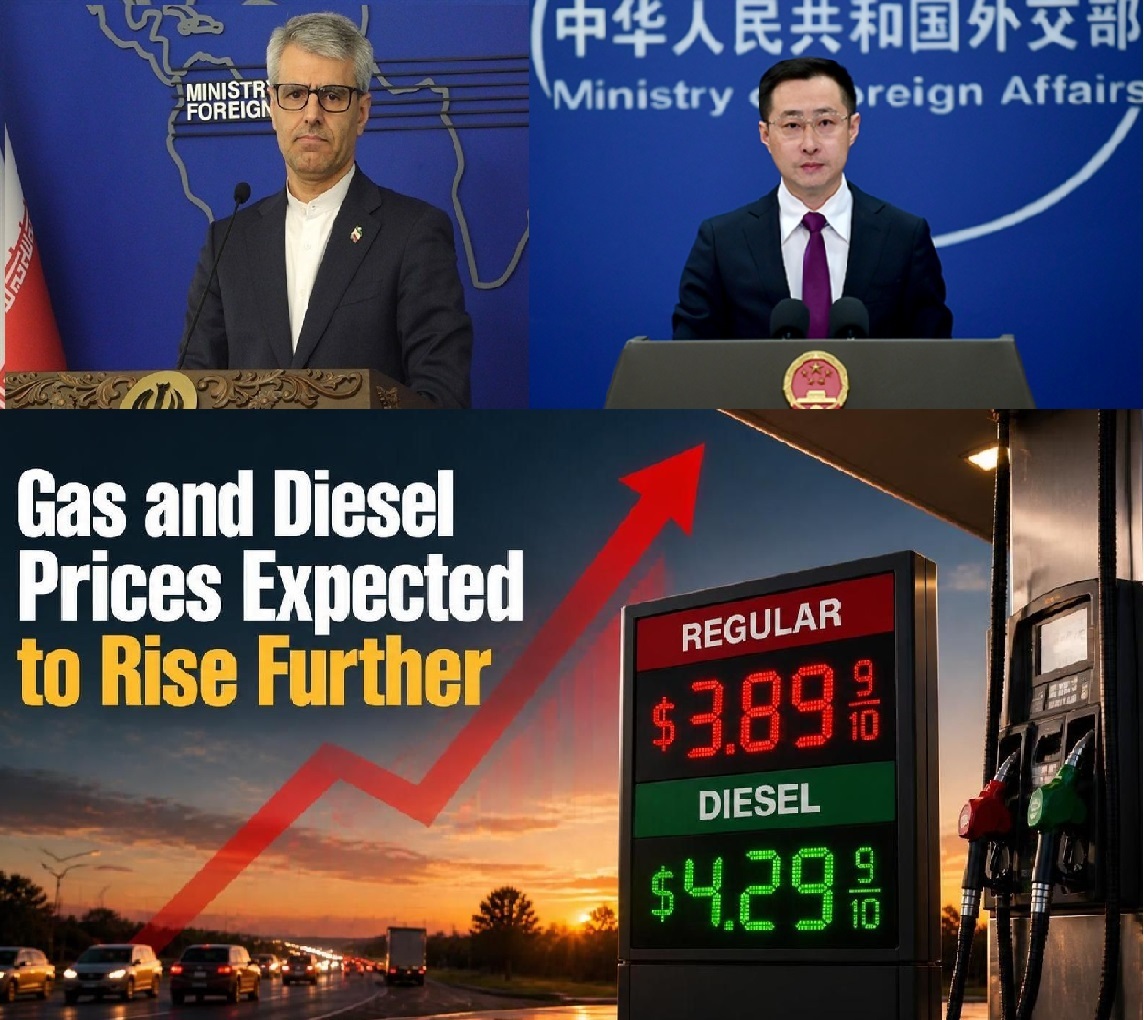
Top Left: Iran’s Foreign Ministry spokesman Esmail Baghaei, Top Right: Chinese Foreign Ministry spokesperson Lin Jian
Iran Warns of 'Consequences' for Nations Supporting U.S. Military or Economic Campaigns, China vows 'necessary' action after US threat of secondary Iran sanctions, Gas and Diesel Prices Expected to Rise Further
Iran Warns of 'Consequences' for Nations Supporting U.S. Military or Economic Campaigns
Tehran has issued warning to the international community, cautioning both European and regional allies of the United States against any cooperation—whether military or economic—in potential actions against the Islamic Republic. Iran’s Foreign Ministry Spokesman Esmail Baghaei said that any nation allowing the United States to use its territory for attacks against Iran would itself become a legitimate military target. This warning explicitly included European nations hosting US bases.
"Contrary to the notion that we are a threat, there is no justification for any country to fear Iran—unless that nation opens its territory to the United States for aggression against us," Baghaei stated during his weekly press briefing.
He elaborated on Iran’s strategic position, insisting that the Islamic Republic would define the conditions of any conflict, not its adversaries. "Iran does not accept that the aggressor sets the conditions for ending the war," Baghaei emphasized. "It is Iran's right to target the source and origin of any aggressive action. We did not start this war. We have exercised our legitimate right to self-defense and used every diplomatic tool to prevent a war. But we will not allow this war to end on the aggressor's terms."
This military warning is a direct threat to US force posture in Europe, suggesting that countries like Germany, Italy, or Turkey—which host American military installations—could face Iranian missile or drone attacks if they are perceived as staging grounds for an offensive against Iran.
Iran also warned its immediate neighbors in the Persian Gulf region. Mohsen Rezaei, Secretary of Iran’s Supreme National Security Council, warned that any state joining the US-led economic sanctions against Tehran would face catastrophic disruption to their oil exports.
"We are telling all neighboring countries not to join the US economic war on Iran, or Tehran will view them as enemies," Rezaei said, according to the Islamic Republic’s state-run broadcaster.
Rezaei expanded the scope of Iran's potential retaliation far beyond the well-known threat of blocking the Strait of Hormuz. He vowed that Iran is prepared to attack "other routes of oil export from the region."
"If the neighboring states join the US sanctions, not a single drop of oil will be shipped from the Persian Gulf and the Strait of Hormuz," Rezaei stated. "In that case, Iran will view all other routes of oil export from the region as its target."
China vows 'necessary' action after US threat of secondary Iran sanctions
At a press conference on Monday, China’s Foreign Ministry spokesperson Lin Jian stated that China will closely monitor the relevant developments and take necessary actions to safeguard its legitimate rights and interests. He emphasized that sanctions and pressure are not conducive to resolving issues and will only lead to escalation, which serves no one’s interests.
Lin made these remarks in response to a question about how China would react if the United States were to impose secondary sanctions, following threats by U.S. Treasury Secretary Scott Bessent to target countries that engage in trade or dealings with Iran. China has historically been a major purchaser of Iranian oil.
“China will closely watch the situation and take necessary measures to protect our legitimate rights and interests,” Lin said, adding that such tactics are counterproductive and only escalate tensions.
China urges all parties to act with restraint and avoid taking any measures that may further exacerbate tensions or undermine global economic growth and financial stability. Lin reiterated that parties should return to the track of political settlement through dialogue and negotiation at an early date.
According to a Reuters report, Bessent said he would reveal severe measures on Iran during a press conference scheduled for 1 pm EDT on Monday. On Sunday, Bessent wrote in an opinion piece published in the Financial Times that “At dawn begins an economic D-Day - the single greatest financial offensive ever marshalled against an adversary.”
While not detailing specific measures, Bessent signaled that the U.S. would target nations that engaged with Iran’s economy and financial system. “They would do well to consider the consequences of sustaining it,” he wrote in the Financial Times, according to the report.
Gas and Diesel Prices Expected to Rise Further
Over the past few weeks, gasoline and diesel prices have exhibited a clear and sustained upward trend, with experts warning that this trajectory is likely to intensify in the near term. The primary catalyst behind this surge is a tightening physical supply of crude oil, driven largely by the partial or threatened closures of two critical maritime chokepoints: the Strait of Hormuz and the Bab el-Mandeb Strait.
Analysts note that, until recently, crude oil prices have been artificially held below the $100-per-barrel threshold through a combination of U.S.-led manipulation and market interventions, including coordinated releases from national strategic petroleum reserves. This policy effectively suppressed price spikes in the short term but did little to address the underlying supply deficit. However, as these strategic reserves are progressively drawn down and approach depletion, their dampening effect on prices is fading. Without such buffers, the market will become increasingly exposed to the full force of the supply crunch, setting the stage for a sharp escalation in crude oil prices.
Given the direct correlation between crude oil costs and retail fuel prices, consumers should anticipate immediate and significant increases at the pump. The lag between a rise in crude benchmarks and higher gasoline/diesel prices is typically short—often just a few days to a couple of weeks—owing to the rapid pass-through of wholesale costs to retail stations. This looming price spike is compounded by seasonal demand pressures, potential refinery maintenance, and ongoing geopolitical uncertainties, all of which threaten to exacerbate the financial burden on households and businesses alike.
Diesel prices, in particular, have surged dramatically, with U.S. diesel prices recently surpassing $186 per barrel for the first time. This spike is largely attributed to ongoing geopolitical tensions and supply chain disruptions, which have tightened the market and increased costs for transportation and logistics industries.
The impact of rising fuel prices extends beyond just drivers filling up their tanks. The trucking industry, which relies heavily on diesel, faces increased operational costs that may translate into higher prices for goods and services across the economy.
While some short-term fluctuations in prices are normal, the current market conditions suggest a sustained period of higher fuel costs. Consumers and businesses alike should prepare for this trend and consider strategies to mitigate its financial impact.