K-Points: Beyond the Headlines — War, Unrest, Commodity Prices, and Beyond
K-Points: Beyond the Headlines — War, Unrest, Commodity Prices, and Beyond
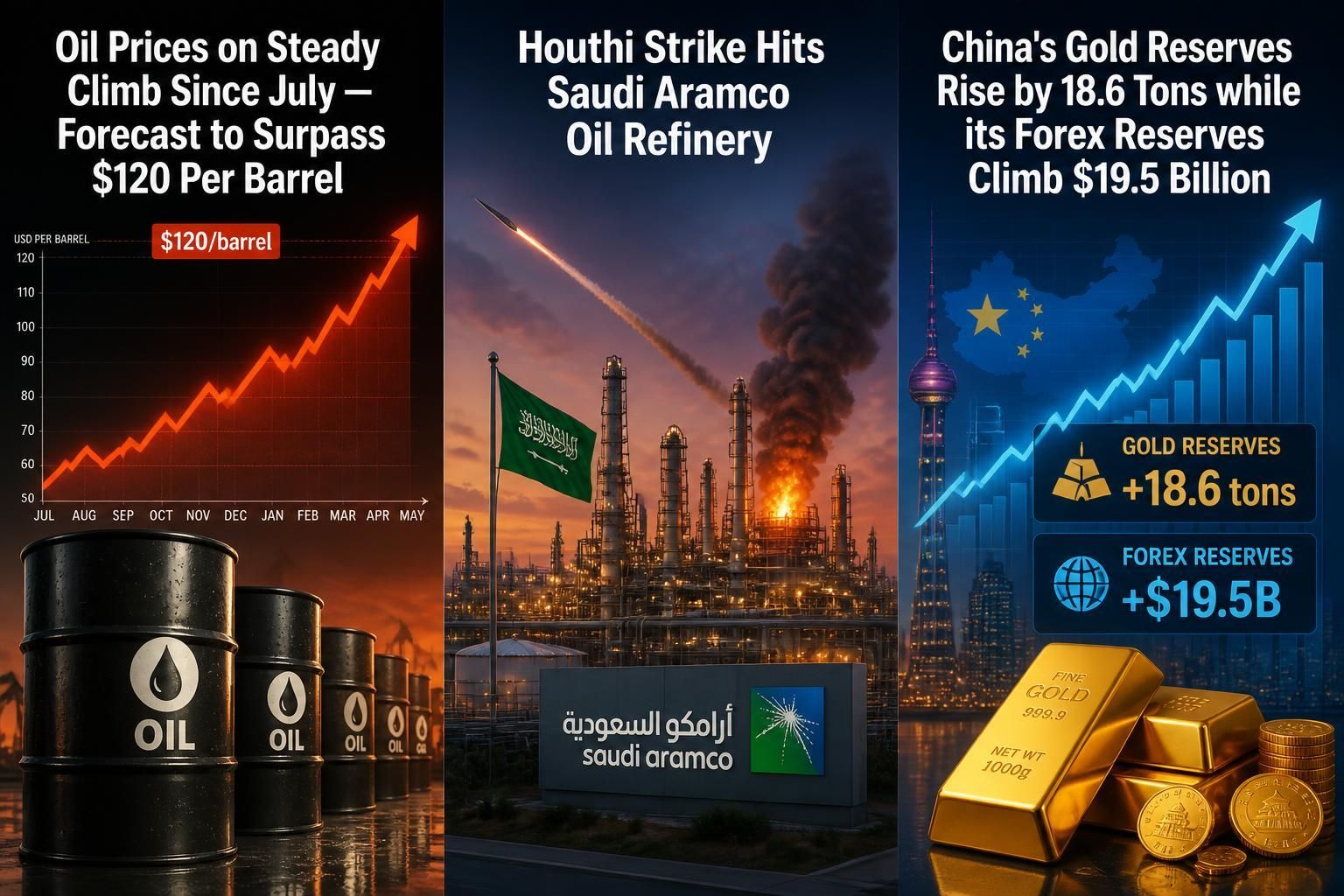
Oil Prices on Steady Climb Since July, Forecast to Surpass $120 Per Barrel; Houthi Strike Hits Saudi Aramco Oil Refinery; China's Gold Reserves Rise by 18.6 Tons while its Forex Reserves Climb $19.5 Billion
Oil Prices on Steady Climb Since July, Forecast to Surpass $120 Per Barrel
Oil prices have been on a steady climb since July 15, recently reaching nearly $98 per barrel. This upward trend can be traced back to the U.S. military attack on Iran on March 28 and Iran’s subsequent closure of the Strait of Hormuz—a critical chokepoint for global oil shipments. In response, the U.S. administration attempted to control prices by releasing oil from the Strategic Petroleum Reserve (SPR) and by manipulating oil markets. Japan followed suit by limiting its own oil purchases and releasing from its strategic reserves, while China also restrained itself from buying excessive amounts of oil in an effort to stabilize the market.
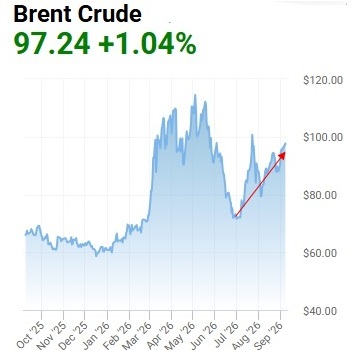
However, since mid-July, the U.S. Strategic Petroleum Reserve has fallen to its lowest level in decades, severely limiting the government’s ability to release additional oil to compensate for the supply shortages caused by the war it initiated. As a result, oil prices are now slowly but surely rising again. A new forecast from Bloomberg suggests that oil could soon reach 120 per barrel. Some analysts warn that if the situation around the Strait of Hormuz remains unresolved and the strait stays closed, prices could soar well beyond 120 per barrel.
This sustained increase in oil prices is expected to have a cascading effect on a wide range of consumer products, driving up transportation, manufacturing, and energy costs. Ultimately, this will likely lead to much higher inflation, placing additional strain on households and economies worldwide.
Houthi Strike Hits Saudi Aramco Oil Refinery
The Yemeni armed forces (Houties) have initiated a fresh wave of military strikes targeting oil facilities, Jizan refinery, operated by Saudi Aramco, the state-owned petroleum and natural gas giant of Saudi Arabia Financial Times reported. These operations are described as a direct retaliatory measure against what the Yemeni forces characterize as the Riyadh persistent aggression and its tightening blockade on Yemen. The strikes aim to disrupt key economic infrastructure in response to the prolonged siege and ongoing military actions that have severely impacted the Yemeni population. Much like earlier Houthi attacks, this strike disrupted production at the refinery. Aramco has yet to officially comment on the incident.
China's Gold Reserves Rise by 18.6 Tons while its Forex Reserves Climb $19.5 Billion
China's foreign exchange and gold reserves both rose in August, driven by a weaker US dollar, shifting global monetary policy expectations, and uneven asset price movements, according to the State Administration of Foreign Exchange (SAFE).
The People's Bank of China (PBOC) reported that foreign exchange reserves increased by $19.5 billion from July to reach 3.4383 trillion at the end of August, a gain of 0.57%. Gold reserves also climbed by18.6 tons to 2175 tons during the same period.
In a statement, SAFE attributed the increases to several factors: "changes in global macroeconomic data and market expectations regarding the monetary policies of major economies, a decline in the US dollar index, and uneven price movements in major global financial assets." The central bank also noted the impact of exchange rate fluctuations, which collectively contributed to the reserve growth.
Looking at longer-term trends, PBOC data shows that China's foreign exchange reserves have risen from 3.21 trillion in January 2025 to 3.36 trillion by December, while gold reserves have increased from 73.45 million to 74.15 million ounces over the same period. The August figures mark a further acceleration in both categories, reflecting ongoing portfolio adjustments amid global economic uncertainty.