K-Points News: Beyond the Headlines — War, Unrest, Commodity Prices, and Beyond

K-Points News: Beyond the Headlines — War, Unrest, Commodity Prices, and Beyond
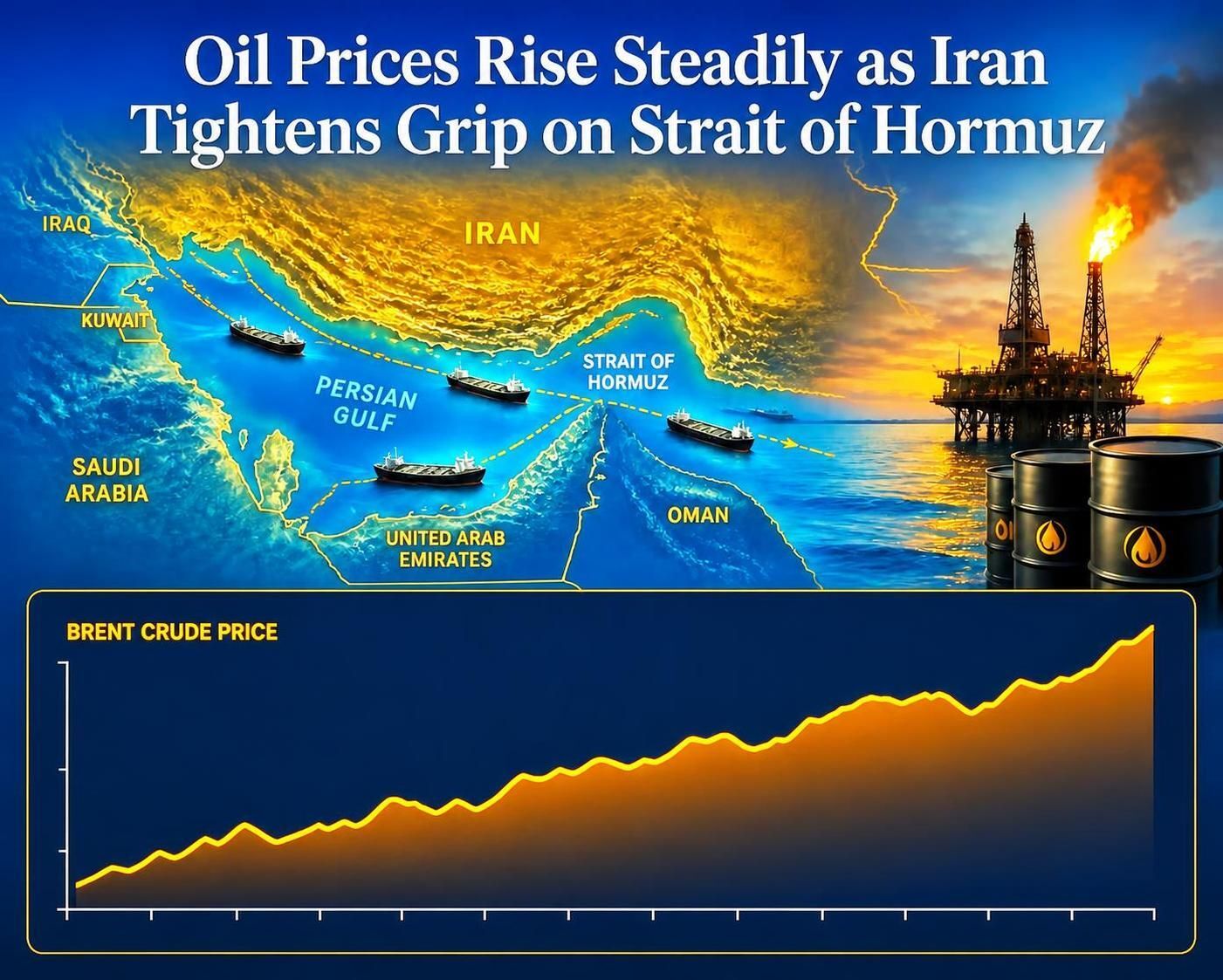
Following the United States withdrawal from the memorandum of understanding (MOU) signed by President Donald Trump and the renewed war with Iran, oil prices have been climbing steadily. The rise of oil is a consequence of Iran’s reclosure of the Strait of Hormuz.
In July, after the United States accepted Iran’s conditions and signed the MOU, oil prices fell sharply, dropping below $70 per barrel. But after the United States withdrew from the agreement, prices began rising again and are now approaching $110 per barrel.
In recent days, Iran has tightened its control over the Strait of Hormuz. Iran prevents ships that have not coordinated their passage with the Islamic Revolutionary Guard Corps (IRGC) from crossing. Iran has also been targeting vessels almost daily.
Iran has communicated through various channels that vessels must coordinate with the Islamic Revolutionary Guard Corps (IRGC) before transiting the Strait. The United States, on the other hand, has been encouraging ships to pass through, offering financial incentives and other forms of support. The offered financial incentives provoke some ship owners and sailors who are eager to make quick profits to sail through the southern part of the Strait despite the risks.
In the last two weeks, Iran has taken more decisive action against ships that do not comply with its passage instructions. As a result, more vessels have been targeted, and the volume of oil transiting the Strait has dropped significantly. Most analysts believe there is no military solution to the situation and that the U.S. must return to the Memorandum of Understanding (MOU)
