K-Points News: Beyond the Headlines — War, Unrest, Commodity Prices, and Beyond

K-Points News: Beyond the Headlines — War, Unrest, Commodity Prices, and Beyond
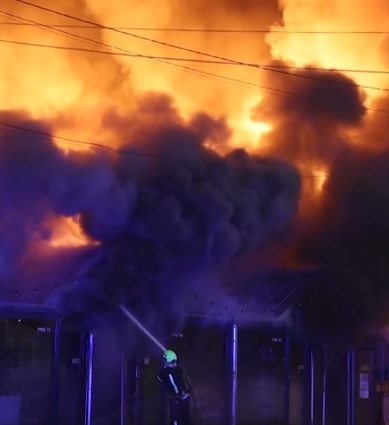
Russia Strikes Ukraine in Aftermath of Major Drone Attack; Pope Condemns Israeli Violence,Saudi Oil Shipments Face Disruption
Russia Strikes Ukraine in Aftermath of Major Drone Attack
Russia unleashed a new wave of intensive overnight strikes across Ukraine on in retaliation for one of the largest Ukrainian aerial attacks on Russian soil since the start of the war. The strikes came less than 24 hours after Ukraine launched hundreds of drones deep into Russian territory.
According to Russian officials, the primary targets in Ukraine were defense industrial facilities. The Russian Defense Ministry stated that its strikes focused on a facility in Kyiv operated by the Ukrainian defense company Fire Point. Moscow claims the plant produces critical components for Flamingo missiles, as well as parts used in the assembly of Ukrainian combat drones. Local Ukrainian authorities reported heavy damage at several industrial sites, but the full extent of the destruction is still being assessed.
These retaliatory strikes followed a massive Ukrainian drone offensive on Sunday, which saw over 800 drones launched across western and central Russia. The scale of the assault was described by Moscow region governor Andrei Vorobyov as one of the largest ever directed at the capital area. In a series of Telegram posts, Vorobyov confirmed that the attacks had killed at least six people, including an 83-year-old man in the town of Podolsk, where several other residents were also injured.
The governor further detailed significant damage at multiple sites across the Moscow region. Notably, a major warehouse in the town of Domodedovo—located near one of Moscow’s busiest international airports—was struck, adding to the sense of disruption around the capital. Debris from downed drones also caused fires and structural damage in other residential and industrial zones.
Russia's Ministry of Defense reported that its air defense systems successfully intercepted and destroyed 822 Ukrainian drones across the country throughout the day. Despite the high number of interceptions, the sheer volume of the attack breached defenses in several areas, leading to the casualties and property damage.
Pope Condemns Israeli Violence
In a recent statement reported by Vatican News, Pope Leo XIV once again called for an immediate end to what he described as "the repeated acts of violence against the Palestinian population of the West Bank." The pontiff's renewed plea comes amid ongoing tensions and humanitarian concerns in the region, where clashes and military operations have frequently targeted Palestinian civilians. Going further, the Pope issued an urgent appeal to the international community, urging leaders and global institutions to "ensure that progress is made toward a two-state solution, for a just and lasting peace."
Saudi Oil Shipments Face Disruption
Recent data from maritime tracking firms has revealed a pronounced decline in crude oil movements departing from Saudi Arabia’s western coast. However, analysts urge caution, noting that these figures may not directly equate to a corresponding drop in actual production or exports, as operational and concealment factors complicate the picture.
According to Vortexa, reported flows from the region fell from 2.71 million barrels per day to 2.38 million barrels per day—a modest decrease of roughly 12%. In contrast, Kepler recorded a far more dramatic reduction, with flows dropping from 4.04 million barrels per day to just 1.78 million barrels per day, representing a decline of more than 55%. The stark discrepancy between these two datasets underscores the significant challenges in accurately assessing the true scale of Saudi oil exports, particularly in light of deliberate efforts to obscure shipping movements.
Analyst believe that the disruption to maritime traffic poses a growing logistical and financial challenge for Saudi Arabia. As it works to maintain oil flows while limiting its tankers' exposure to Yemeni strikes, the kingdom may rely on secrecy, reduced AIS visibility, and alternative shipping routes to manage short-term risks. However, prolonged disruption could drive up export costs and weaken the competitiveness of Saudi crude in global markets.
