K-Points News: Beyond the Headlines — War, Unrest, Commodity Prices, and Beyond

K-Points News: Beyond the Headlines — War, Unrest, Commodity Prices, and Beyond
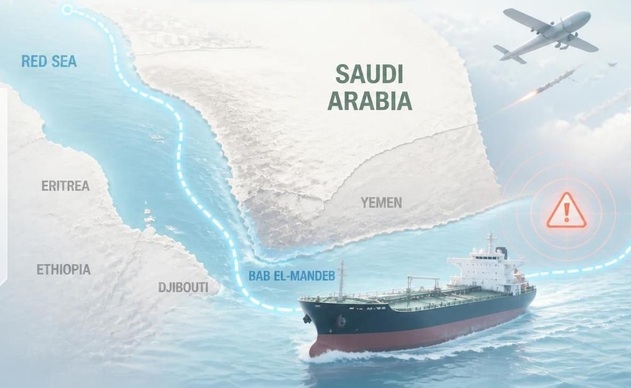
Bab El-Mandeb Strait
Saudi Arabia’s Last Major Oil Route Faces Houthi Pressure, Israel Continues Deadly Strikes in South Lebanon, Ukraine Halts All Agricultural Exports via Black Sea
After the US-Israel war on Iran and the closure of the Strait of Hormuz, Saudi Arabia had continued exporting part of its oil through the alternative route via the Bab al-Mandab strait. But the Houthi blockade is now restricting that option.
On Wednesday, the Yemen Houthis had fired ballistic missiles at the NCC Wafaa, a Saudi oil tanker, off the coast of Yanbu, a major Saudi port city in the northern Red Sea. This is the northernmost attack by the Yemeni group since it began its blockade on Saudi Arabia on July 22. A further shift north, toward Egypt and the Suez Canal by preventing tankers passage by Yemen Houties, would increase economic pressure on the Saudi Arabia further.
Until now, the Houthis had mostly targeted ships near Yemen's coast, in the southern Red Sea and the Gulf of Aden. The group claimed the NCC Wafaa tanker had violated the blockade and ignored warning calls before it was struck. Ibrahim Jalal, a Yemen analyst, described the attack as a “bid to deny the Suez Canal rerouting” — the alternative route Saudi Arabia has increasingly relied on since the Strait of Hormuz was closed earlier this year.
Meanwhile, Israel continues its deadly attacks in southern Lebanon, causing widespread damage. Reports indicate that the Israeli military has bombed Wadi Houjeir and Meiss el-Jabal in south Lebanon on Friday, and there are reports that the Chacra water pumping station has been set on fire by Israel.
In another conflict, amid Russian advances on the battlefield and the blockade of Ukrainian ports, Ukrain is no longer able exporting any agricultural products via the Black Sea, according to Ukrainian Minister of Agrarian Policy and Food Taras Vysotsky, Tass reported.
Taras Vysotsky siad that Ukraine's overall export volume has fallen sharply. Before July, roughly 85% of Ukrainian agricultural exports were routed through Black Sea ports. “Currently, only about 10% is shipped by rail and 5% by road,” the minister added.
Votsky also pointed out that about a third of Ukraine's arable land is allocated for winter crops, with sowing set to begin in a month. Farmers typically use revenues from the summer harvest to cover operating expenses and finance the autumn sowing campaign. If producers cannot generate sales now, the entire annual agricultural cycle could be disrupted.
“They lack money, and in the worst-case scenario, the next harvest will simply go to waste,” he said.
