K-Points: Beyond the Headlines — War, Unrest, Commodity Prices, and Beyond
K-Points: Beyond the Headlines — War, Unrest, Commodity Prices, and Beyond
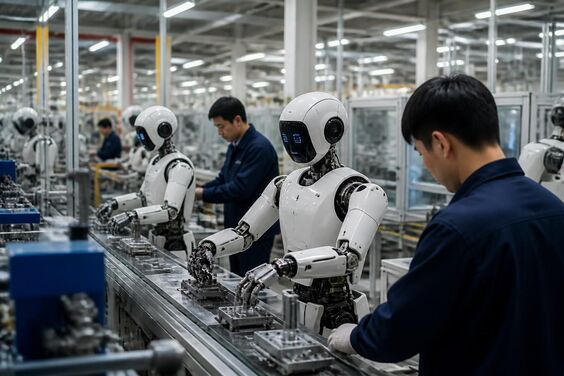
U.S. Escalates Tech War, Bans Import of Chinese Advanced Robots and Power Inverters
In less than a week, the United States has escalated its technology restrictions against China on two fronts, signaling a more aggressive posture toward China and fear of China rapid growth.
The most recent action came on this Tuesday, when the U.S. Federal Communications Commission (FCC) added advanced robotics and power inverters to its "Covered List," according to a report by the Global Times. This designation effectively bans the import of new models of these products from entities deemed national security threats, directly targeting Chinese manufacturers.
This follows a move just days earlier, on July 23, when the U.S. Department of Defense published an updated version of its so-called "1286 List." The Pentagon described the list as a tool to "counter unauthorized technology transfer to foreign countries of concern." It specifically identified 130 academic and research institutions located in China, Russia, and Iran. This highlights the growing concern in the US regarding the rising power of China, Russia, and Iran.
In response, China’s Ministry of Commerce strongly condemned the action, accusing Washington of politicizing, weaponizing, and instrumentalizing research cooperation. The ministry argued that the move obstructs vital exchanges between the scientific communities of both nations and runs counter to the global trend of collaborative innovation in science and technology.
Analysts see these two moves as targeting opposite ends of the same supply chain in a coordinated fashion. The first—the institutional blacklist—seeks to cut off high-level channels for U.S.-China research cooperation at the earliest, most formative stages of innovation. The second—the import ban on commercial products like robots and inverters—aims to block the resulting Chinese technologies from reaching the U.S. market, even as finished goods.
Rather than a coherent and effective long-term strategy, these latest steps appear driven by a growing sense of anxiety in Washington over China’s rapid technological rise and a desire to preserve U.S. technological hegemony. Analysts argue that the "small yard, high fence" approach—designed to protect a narrow set of advanced technologies—has never succeeded in halting China’s progress.