K-Points News: Beyond the Headlines — War, Unrest, Commodity Prices, and Beyond

K-Points News: Beyond the Headlines — War, Unrest, Commodity Prices, and Beyond
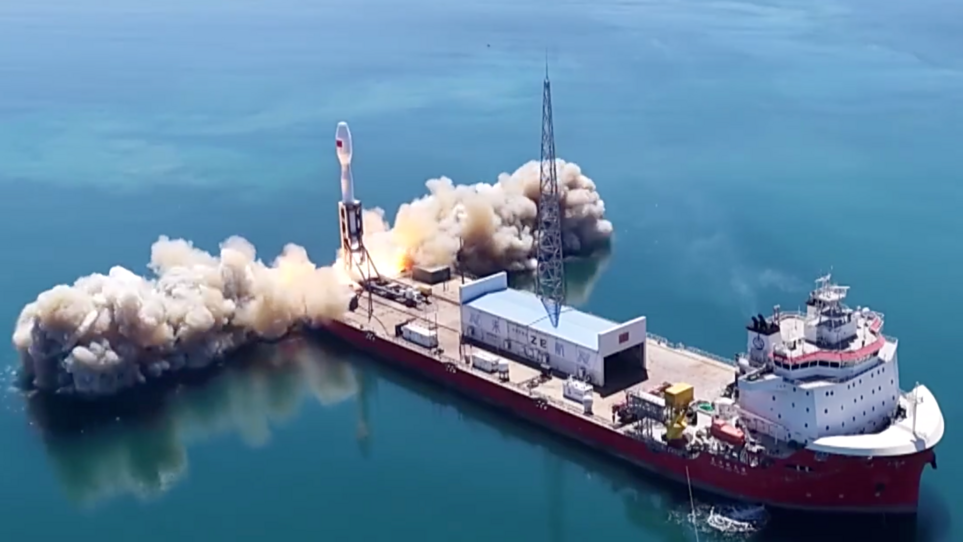
Smart Dragon-3 carrier rocket lifts off (CGTN)
US Targets Russia, China with Nuclear Strategy as China sent two AI-powered hyperspectral satellites into orbit
The Pentagon is crafting a new nuclear strategy that highlights the use of tactical nuclear weapons in regional conflicts involving Russia and China, according to Kommersant, which cites U.S. media sources. This revised plan, prepared by Under Secretary of Defense for Policy Elbridge Colby, follows a strategy akin to the "escalate to de-escalate" doctrine. Its goal is to assure U.S. allies that Washington is prepared to deploy its full military power to defend them. Nevertheless, this strategy entails considerable risks.
At the same time, while the U.S. is engaged in various conflicts—both active and potential—China is advancing its leadership in space technology and artificial intelligence. On Wednesday morning, China successfully launched two AI-driven hyperspectral satellites into orbit, marking progress in embedding AI computing capabilities in space operations, CGTN reported. The Smart Dragon-3 carrier rocket took off at 10:38 am from offshore waters near Haiyang, Shandong Province, deploying the Oriental Smart Eye (OSE) hyperspectral satellites 01 and 02 into their designated orbits. The Taiyuan Satellite Launch Center managed the launch, media reported.
Unlike traditional remote-sensing satellites that send raw data back to Earth for analysis, these satellites can process data onboard while in orbit. Each satellite is equipped with AI computing power reaching up to TOPS (trillions of operations per second). Song Bingchen from Star.ai explained, "A high-performance laptop typically has about 20 to 30 TOPS of computing power, which means a single hyperspectral AI satellite matches the computing capacity of 20 to 30 high-end laptops." With this onboard "brain," data can be processed in space, allowing the satellites to transmit analyzed results rather than raw images. According to Satellite AI Algorithm Engineer Peng Feiy, each satellite can produce tens to hundreds of gigabytes of imaging data daily. It can process 15 seconds of imagery within 10 to 15 minutes in orbit and send only the analyzed data to the ground, reducing the volume of downlinked data to just tens of kilobytes or megabytes,
